Darius The Mede
This article is about Darius, the Mede. For other men named Darius in Scripture, see the Darius disambiguation page.
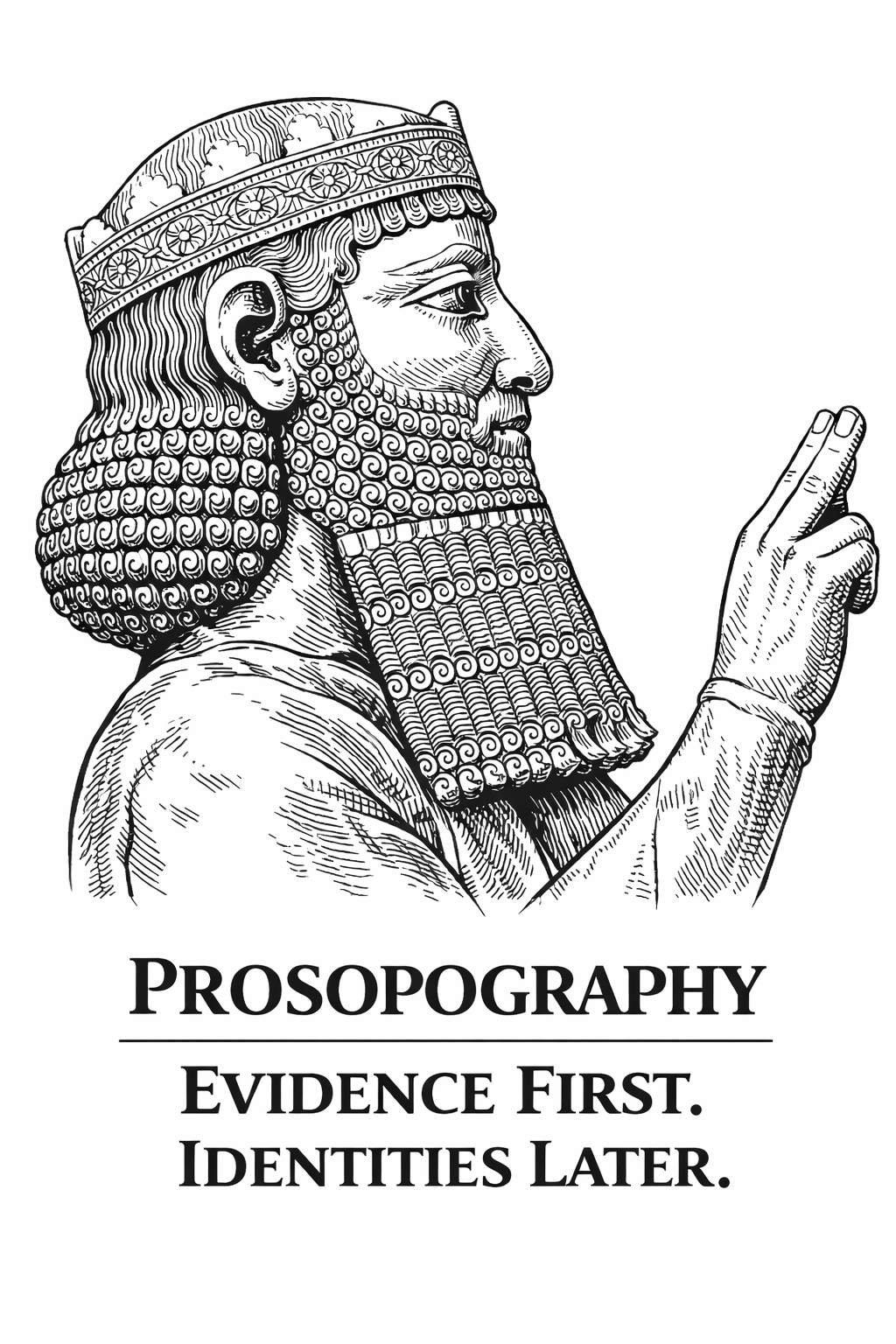
Textual Profile: Darius the Mede in Daniel
The figure known as Darius the Mede appears exclusively in the Book of Daniel. He is introduced abruptly at the narrative transition following the fall of Babylon and is treated throughout the text as a legitimate ruling authority. Daniel does not explain his accession, lineage, or political background; instead, his authority is assumed and exercised without narrative justification.
Darius the Mede is first mentioned at the conclusion of Daniel 5, immediately after the death of Belshazzar and the fall of Babylon. The text states that “Darius the Mede received the kingdom,” situating him temporally between the Babylonian regime and the subsequent Persian administration. The narrative then proceeds without pause to describe his rule and governmental actions.
Within Daniel 6, Darius is portrayed as an active ruler who organizes the kingdom, appoints administrators, and issues binding decrees. His authority is presented as real and enforceable, extending over provincial officials and legal processes. The narrative does not depict him as a symbolic or nominal figure; rather, he functions as the operative sovereign during the events of the lions’ den episode.
Daniel further refers to Darius the Mede in later chapters as a chronological marker. Daniel 9:1 dates events to “the first year of Darius the son of Ahasuerus, of the seed of the Medes,” and Daniel 11:1 refers again to “the first year of Darius the Mede.” These references reinforce his role as a temporal anchor within Daniel’s internal chronology.
The text provides only minimal biographical detail. Darius is identified ethnically as “the Mede” and is said to be “about sixty-two years old” at the time he received the kingdom. No reign length is specified, and no transition to another ruler is narrated within Daniel itself.
Notably, Daniel does not present Darius the Mede as a problem to be explained. The author does not signal uncertainty, confusion, or novelty in his introduction. The narrative assumes that the reader will accept the existence and authority of this ruler as part of the historical setting in which Daniel’s experiences unfold.
Authority attested: at the fall of Babylon (Daniel 5–6)
Modern chronological correlation: commonly dated to c. 539 BC
Historical Controversy:
For much of the 19th and 20th centuries, many secular historians considered "Darius the Mede" to be a fictitious or confused character, since extra-biblical sources record that Cyrus the Persian conquered Babylon in 539 BCE, with no mention of a Median ruler named Darius between the fall of Babylon and Cyrus's reign. This led some critics to view the Book of Daniel as historically unreliable.
Proposed Identifications:
Various scholars have proposed solutions to reconcile the biblical account with known history:
- Gubaru (Gobryas):** A governor appointed by Cyrus over Babylon, mentioned in the Nabonidus Chronicle
- Alternative title for Cyrus:** Darius as a throne name or title used by Cyrus himself
- Cambyses II:** Cyrus's son and co-regent
- A regional governor:** A Median official who ruled under Cyrus's authority
The debate continues, though evangelical scholars tend to maintain that "Darius the Mede" was a genuine historical figure whose identity in extra-biblical records has simply been obscured by the incomplete nature of ancient sources.
**Biblical References:**- Daniel 5:31 - Received the kingdom at age 62 after Belshazzar's fall
- Daniel 6:1, 6, 9, 25, 28
- Daniel 9:1 - Identified as "son of Ahasuerus (Persian King Xerxes I), of the seed of the Medes"
- Daniel 11:1 - A reference to his first year
- Daniel 5:31 And Darius the Mede received the kingdom, being about threescore and two years old.
- Daniel 11:1Daniel 6:6 Then these presidents and satraps assembled together to the king, and said thus unto him, King Darius, live for ever.
- Daniel 11:1Daniel 6:9 Wherefore king Darius signed the writing and the interdict.
- Daniel 11:1Daniel 6:25 Then king Darius wrote unto all the peoples, nations, and languages, that dwell in all the earth: Peace be multiplied unto you.
- Daniel 11:1Daniel 6:28 So this Daniel prospered in the reign of Darius, and in the reign of Cyrus the Persian.
- Daniel 9:1Daniel 9:1 In the first year of Darius the son of Ahasuerus, of the seed of the Medes, who was made king over the realm of the Chaldeans,
- Daniel 11:1 And as for me, in the first year of Darius the Mede, I stood up to confirm and strengthen him.
Daniel 11:1Daniel 6:1 It pleased Darius to set over the kingdom a hundred and twenty satraps, who should be throughout the whole kingdom;
Historical Controversy:
For much of the 19th and 20th centuries, many secular historians considered "Darius the Mede" to be a fictitious or confused character, since extra-biblical sources record that Cyrus the Persian conquered Babylon in 539 BCE, with no mention of a Median ruler named Darius between the fall of Babylon and Cyrus's reign. This led some critics to view the Book of Daniel as historically unreliable.
Proposed Identifications:
Various scholars have proposed solutions to reconcile the biblical account with known history:
- Gubaru (Gobryas):A governor appointed by Cyrus over Babylon, mentioned in the Nabonidus Chronicle.
- Alternative title for Cyrus:** Darius as a throne name or title used by Cyrus himself
- Cambyses II:Cyrus's son and co-regent
- A regional governor: A Median official who ruled under Cyrus's authority
The debate continues, though some evangelical scholars maintain that "Darius the Mede" was a genuine historical figure whose identity in extra-biblical records has simply been obscured by the incomplete nature of ancient sources.
Biblical References
- Daniel 5:31And Darius the Mede received the kingdom, being about sixty two years old.
- Daniel 6:1 Set up 120 satraps; issued the decree that led to Daniel in the lions' den
- Daniel 6:6 Then these presidents and satraps assembled together to the king, and said thus unto him, King Darius, live for ever.
- Daniel 6:9 Darius signed the writing and the interdict.
- Daniel 6:28 Daniel prospered in the reign of Darius, and in the reign of Cyrus the Persian.
- Daniel 9:1 Identified as "son of Ahasuerus (Persian King Xerxes I), of the seed of the Medes"
- Daniel 11:1 A reference to his first year